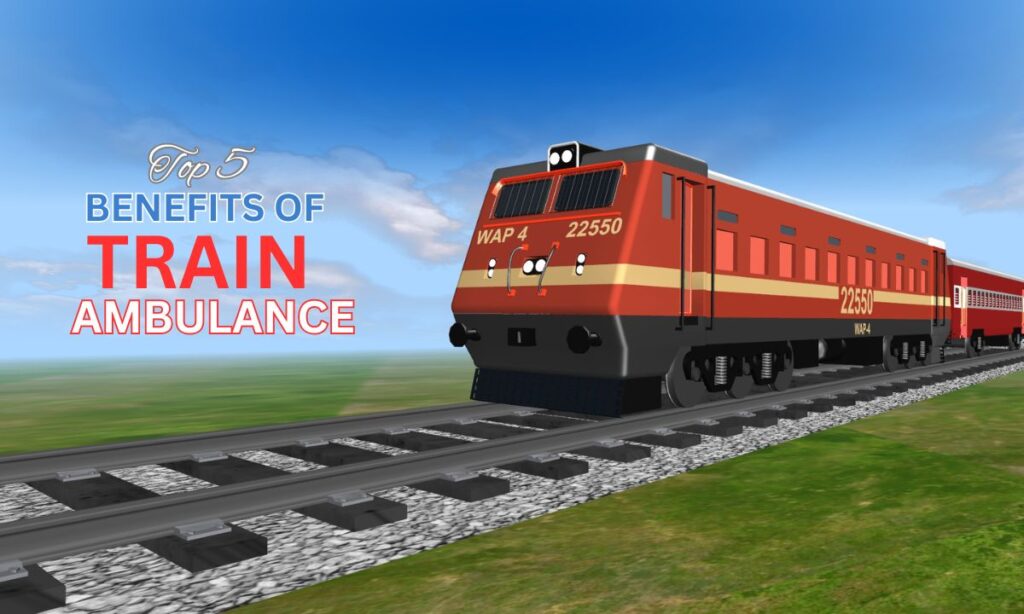
Are you looking for a train ambulance in chennai for a long-distance emergency medical transportation?
Chennai is widely regarded as one of India’s most advanced healthcare destinations. Patients from across the country travel here for complex surgeries, transplants, oncology care, and intensive treatments. However, medical journeys do not always begin or end in one city. In many situations, a patient must be transferred—carefully and under medical supervision—over long distances.
In such cases, train ambulance in chennai becomes a medically preferred option, not because it is convenient, but because it allows continuous clinical care during prolonged travel. This blog explains when train ambulance transfers are recommended, how they are clinically managed, and what families should understand before making this critical decision.
At Save Life Care, train ambulance transfers are approached as medical extensions of hospital care, not as transport arrangements. The focus remains on patient stability, risk reduction, and continuity of treatment.
Understanding Train Ambulance Beyond Transportation
A train ambulance is often described as an “ICU on wheels,” but that description only captures part of its role. Clinically, a train ambulance functions as a controlled treatment environment where patients can be monitored, supported, and managed over several hours—or even days—depending on distance.
In a typical train ambulance in chennai, the patient is shifted from the hospital to the railway station using an advanced road ambulance. Once onboard the designated coach, medical monitoring begins before the train departs and continues uninterrupted until the patient is handed over to the receiving hospital.
What distinguishes a medically sound train ambulance transfer is not the train itself, but:
- Clinical planning
- Appropriate equipment configuration
- Qualified medical personnel
- Clear hospital-to-hospital coordination
Without these elements, long-distance patient movement carries significant risk.
When Is Train Ambulance in Chennai Medically Recommended?
Train ambulance transfers are not chosen randomly. They are recommended when a patient’s condition requires stability over speed and supervision over convenience.
Doctors and families typically consider train ambulance in chennai when:
- A patient is not fit for air travel due to pressure or altitude sensitivity
- Continuous oxygen or ventilator support is required
- Long-duration medication infusions must be maintained
- The patient’s condition demands constant monitoring
- Road transfer would be physically unsafe or excessively long
In these situations, a train ambulance service in chennai allows care teams to manage patients in a predictable, steady environment where interventions can be made without time pressure.
Clinical Setup Inside a Train Ambulance

A professionally managed train ambulance is configured based on patient condition, not standard templates. This is a critical distinction.
Under Save Life Care’s clinical protocols, equipment and staffing are aligned with medical needs, which may include:
- ICU-grade hospital bed with secure positioning
- Multiparameter monitoring (heart rate, oxygen saturation, BP)
- Ventilator (invasive or non-invasive, as required)
- Oxygen supply with redundancy
- Infusion pumps for medications
- Suction and airway management tools
- Emergency drugs and resuscitation equipment
Equally important is the onboard medical team. Depending on case complexity, this may include:
- A critical care doctor
- An ICU-trained nurse
- A qualified paramedic
Their responsibility is active clinical management—not observation.
This is why train ambulance in chennai should always be assessed as a medical service, not a logistical one.
Patients Commonly Transferred by Train Ambulance
A wide range of patients may require a medically supervised transfer. Common clinical scenarios include:
- ICU patients dependent on ventilator or oxygen therapy
- Trauma patients after initial stabilization
- Cancer patients being shifted for specialized oncology care
- Patients with liver, kidney, or cardiac failure
- Post-operative patients requiring observation
- Elderly patients with multiple comorbidities
In all these cases, train ambulance in chennai enables continuity of care during movement—reducing the risk associated with treatment gaps.
How Clinical Coordination Shapes Safe Transfers
One of the most underestimated risks in patient transfer is poor coordination. Delays, unclear handovers, or missing equipment can compromise patient safety.
Save Life Care follows a medically led coordination process, ensuring that train ambulance transfers are planned, not improvised. This includes:
- Review of patient diagnosis and current stability
- Medical clearance and risk assessment
- Equipment and staffing planning
- Alignment with sending and receiving hospitals
- Pre-departure stabilization
- Continuous monitoring throughout transit
This structured approach ensures that train ambulance in chennai functions as a continuation of hospital care—not a break from it.
Why Medical Oversight Matters More Than Speed
In critical care, faster is not always safer. Sudden changes in patient condition require calm, controlled response—not rushed movement.
A well-managed train ambulance service in chennai prioritizes:
- Hemodynamic stability
- Oxygenation consistency
- Medication continuity
- Real-time clinical decision-making
This is especially important during long journeys, where patient conditions can evolve gradually and require timely intervention.
Emotional and Ethical Responsibility in Patient Transfers
Families often make transfer decisions during moments of stress, uncertainty, and emotional fatigue. In such situations, clarity and honesty matter as much as medical capability.
Save Life Care approaches train ambulance in chennai with a strong ethical framework:
- Transparent communication
- Realistic expectations
- Patient dignity at every stage
- Respect for family concerns
Because critical transfers are not commercial transactions—they are matters of trust.
Conclusion: Train Ambulance in Chennai as a Medical Decision
Choosing train ambulance in chennai is not about selecting a mode of transport. It is about choosing a medically governed pathway that minimizes risk while maintaining continuity of care.
When managed professionally, a train ambulance service in chennai becomes an extension of the ICU—moving patients safely without interrupting treatment. Under experienced providers like Save Life Care, these transfers are planned, supervised, and executed with clinical responsibility.
For families and clinicians alike, understanding when and why train ambulance transfers are used helps ensure better outcomes—and safer journeys.